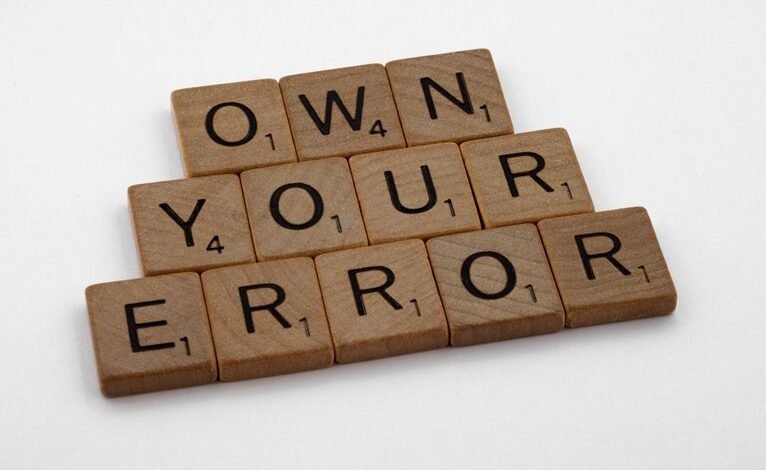
Common mistakes with ςινβανλ derail analyses when parameters are rushed or misinterpreted. Skipping data provenance seeds doubt and repeated revisions. Brief validations can create overconfidence unless thorough verification and objective indicators are in place. Momentum suffers without disciplined sequencing and traceability, while granular timing and independent checks reveal gaps. Terms must map to standardized definitions, audited documents, and trained teams to enforce consistency across platforms. Left unaddressed, these flaws accumulate—prompting you to consider where to start next.
What Common Sinoval Mistakes Cost Time and Confidence
Common Sinoval mistakes frequently consume both time and confidence due to preventable missteps in setup and interpretation. In this context, misjudging parameters, rushing validation, and neglecting data provenance undermine efficiency. The result is delayed decision-making and repeated revisions. An analytic lens reveals that disciplined sequencing, traceability, and disciplined hypothesis testing preserve momentum, reduce doubt, and foster steady progress without unnecessary rework. Not relevant.
How to Detect Sinoval Gaps Before They Bite
How can practitioners identify sinoval gaps before they escalate into observable failures? The analysis isolates indicators, thresholds, and signals that precede adverse events, emphasizing objective metrics over conjecture. Sinoval pitfalls emerge when monitoring lacks granularity or timing. Gap detection relies on cross-checks, trend consistency, and independent verification, enabling early, disciplined intervention without premature conclusions.
Practical Fixes: A Step-by-Step for Error-Proofing Your Sinoval
Subsequent to identifying sinoval gaps, the focus shifts to concrete corrective measures. The procedure enumerates precise steps: map terms to standard definitions, audit existing documents, and replace mistaken terminology with validated equivalents.
Enforce consistency across all channels, document terminology decisions, and train teams accordingly. Regular reviews prevent subtle drift, ensuring freedom through clarity, consistency, and disciplined linguistic stewardship against inconsistent terminology.
Quick Checklists to Keep Sinoval on Track Between Drafts
Between drafts, a concise, repeatable checklist helps sustain terminology integrity without reworking established definitions.
The protocol targets quick verification of term usage, reference alignment, and definition stability, reducing subtopic misalignment.
It also flags workflow bottlenecks, prompting timely adjustments before consolidation.
Frequently Asked Questions
How Does ςινβανλ Differ From Similar Terms?
The term ςινβανλ differs primarily in focus terminology and brand alignment, emphasizing distinct semantic boundaries. It enables precise evaluation of branding intent, ensuring focus terminology aligns with strategic aims while preserving audience-empowering freedom and coherent brand alignment across platforms.
What Common Misconceptions Hinder Quick Sinoval Fixes?
Misconceptions hinder rapid sinoval fixes due to synopsis misinterpretations and validation pitfalls, which obscure underlying mechanisms. The approach emphasizes precise verification, disciplined analysis, and transparent criteria, enabling an independent, freedom-valuing reader to assess interventions before implementation.
Which Signals Indicate a Lingering Sinoval Gap?
Signals indicating a lingering sinoval gap include nuanced discrepancies in diagnostics latency and signals misinterpretation; the assessment reveals persistent gap indicators, requiring meticulous evaluation, disciplined measurement, and disciplined interpretation to prevent erroneous conclusions and ensure objective, autonomous decision-making.
When Is External Review Most Valuable for Sinoval?
External review is most valuable when sinoval differences are uncertain and rapid decisions are risky; it clarifies quick misconceptions and aligns metrics. The process yields precise, analytical insights that empower professionals seeking intellectual freedom and objective evaluation.
How Can I Measure Improvements in Sinoval Accuracy?
Sinoval accuracy can be measured by establishing a rigorous measurement cadence and benchmarking signals, comparing predicted versus actual outcomes, and tracking variance over time; improvements are indicated by reduced error, tighter confidence intervals, and consistent performance across representative scenarios.
Conclusion
In assessing Sinoval projects, one misstep can cascade into postponements and doubt. A finance team once trusted a rushed parameter, only to discover weeks later that a single assumption skewed the forecast by 12%, eroding confidence. The lesson: verify provenance, document timings, and apply independent checks before conclusions. When terminology is standardized and traceability baked in, momentum remains intact, and rework vanishes. Meticulous validation turns uncertainty into clarity, sustaining accuracy across drafts and platforms.